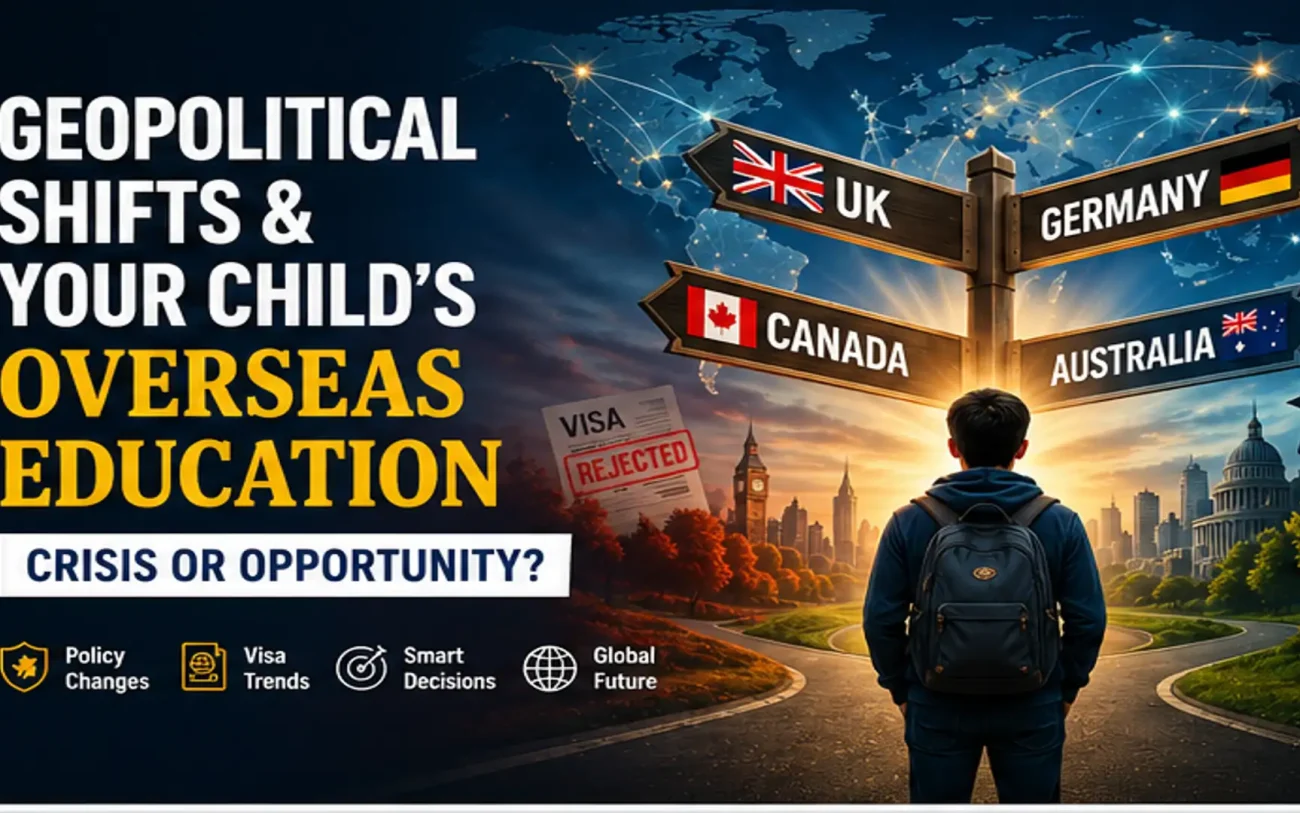
Geopolitical Shifts & Your Child’s Overseas Education:
Crisis or Opportunity?
Visa caps, policy reversals, and global tensions are reshaping study destinations overnight. What looks like chaos is actually a filter — separating the unprepared from the well-guided. Here’s everything you need to know, backed by official government data.
The world has changed. Should your plans?
Canada slashed new study permits by 64% in 2025 — below even COVID-era levels. Australia raised its visa fee 125% in two years. The UK banned dependants for most students. Yet Germany’s international enrolments rose 6%, UK visa approvals rebounded 18% in the first half of 2025, and a new UK-India Free Trade Agreement opened fresh academic pathways. The same map looks like a crisis to some parents — and a clear opportunity to those who are informed and prepared.
- Plans were rigidly built around Canada or Australia with no backup strategy
- Applications are submitted without understanding new PAL, TAL, or attestation rules
- Families depend on post-study work rights that have been quietly shortened
- The plan assumed the whole family could relocate — now banned for most UK routes
- Waiting for “things to calm down” costs your child’s admission window
- You pivot to Germany — tuition-free public universities, 5–10% refusal rate, growing enrolments
- You leverage the UK’s rebound — 96% approval rate in 2025, up 18% in H1 vs 2024
- Fewer competitors in Canada’s shrinking pool means better seats at top universities for strong applicants
- Expert guidance ensures full compliance with rapidly evolving requirements from day one
- Early applicants with strong SOPs dominate a market where weak applicants have stepped back

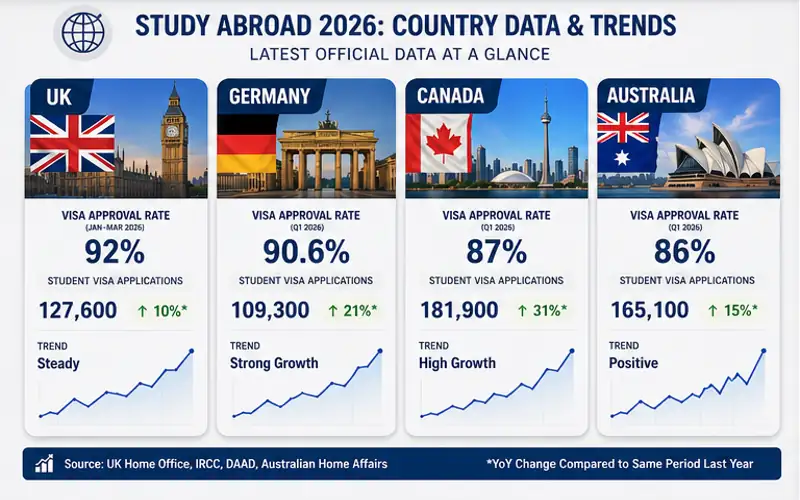
Where the real numbers stand in 2025–26
Approval rates, enrolment trends, and post-study work rights — country by country, sourced directly from official immigration and education departments. No speculation. No outdated advice.
🇬🇧
↑ Rebounding
🇩🇪
↑ Growing
🇨🇦
↓ Restricted
🇦🇺
→ Cautious
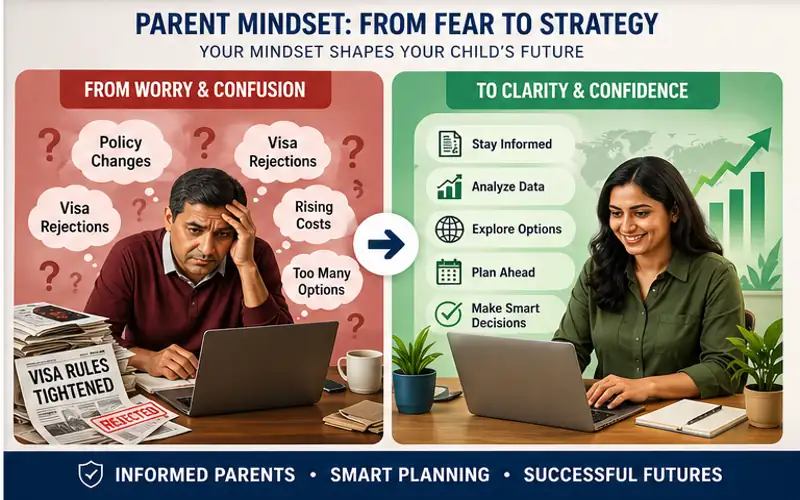
Two mindsets, two very different outcomes
The same geopolitical landscape is being read in two completely different ways by parents right now. Which mindset is guiding your decisions — and where does each path lead?
- “Canada was the plan. Everything else feels risky or unfamiliar.”
- Delays the decision, waiting for “things to calm down” — missing intake windows
- Relies on advice from relatives and WhatsApp groups over official data
- Applies without knowing about new PAL / attestation letter requirements
- Discovers post-study work restrictions after admission is secured
- Assumes all destinations are equally difficult — misses the Germany opportunity entirely
- Treats disruption as a filter: weaker applicants step back, creating space for the prepared
- Explores Germany (free tuition), UK (96% approval), Ireland (1–4% refusal)
- Books consultation 9–12 months early; prepares airtight SOP, financials, and profile
- Understands post-study work rights and visa pathways before selecting a destination
- Partners with expert advisors who track policy changes in real time
- Secures conditional admission while others are still debating — advantage locked in
Your real questions, answered honestly
These are the questions StudyTrek advisors hear most often from parents across Andhra Pradesh and Telangana. Every answer is grounded in the latest official data — not assumptions.
Is it even worth applying abroad given all these visa rejections and policy changes?
▼
Canada was our first choice. Is it completely off the table now?
▼
What about safety — politically and physically — for my child abroad?
▼
Can my child work while studying and find a job after graduation?
▼
How do I know if my child will actually get the visa?
▼
With all this global tension, will a foreign degree still hold value for my child’s career?
▼
Your child’s global future starts with one conversation
The window is not closed — it is narrower and more competitive. That is exactly when expert guidance makes the difference between an acceptance letter and a rejection. Our advisors are tracking every policy change, in real time, so you don’t have to.